Inside the Chocolate Garage: Batches 76–78 Part 2 — From Roast to Mould

In Part 1, I shared the objectives for Lab Batches 76, 77, and 78 — how each product must align with the 8 Pillars of the Dream Product and what Dark Delight, Charge, and Balance are designed to deliver.
Now in Part 2, we step into the garage lab itself and follow the hands-on process that turns those objectives into real products.
Roasting the Foundations
Every ingredient begins with heat. Each nut, seed, or bean has its own personality, and the roast must respect that:
- Macadamias: buttery, rich, roasted to a golden balance.
- Pecans: layered, slightly smoky, needing an even spread on trays.
- Almonds: firm, roasted just enough to release flavor without bitterness.
- Coconut: only lightly toasted, turned often to prevent scorching.
- Hazelnuts: classic roast to bring out sweetness and aroma.
- Coffee: pre-heated and roasted carefully to complement cocoa’s bitterness without overpowering it.
The goal: unlock natural flavour while preserving function. These aren’t just inclusions — they are the core functional foundation of each batch, delivering healthy fats, fiber, and bioactive compounds.
Pre-Grinding and Loading the Melangers
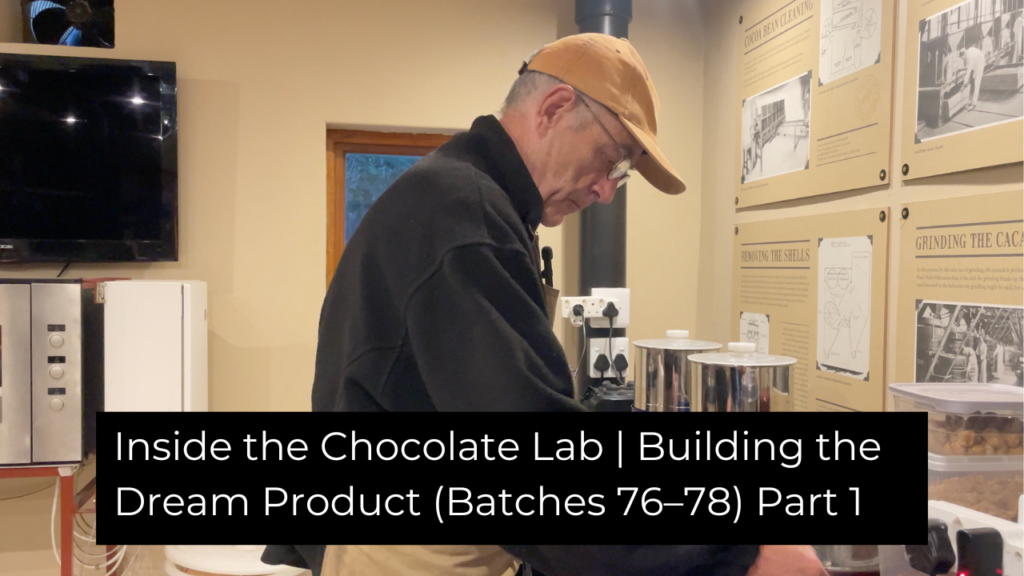
Once roasted, the nuts and seeds are pre-ground. Without this step, the granite wheels of the melanger struggle. Pre-heating the machines also matters — especially on cold days when the paste resists flow.
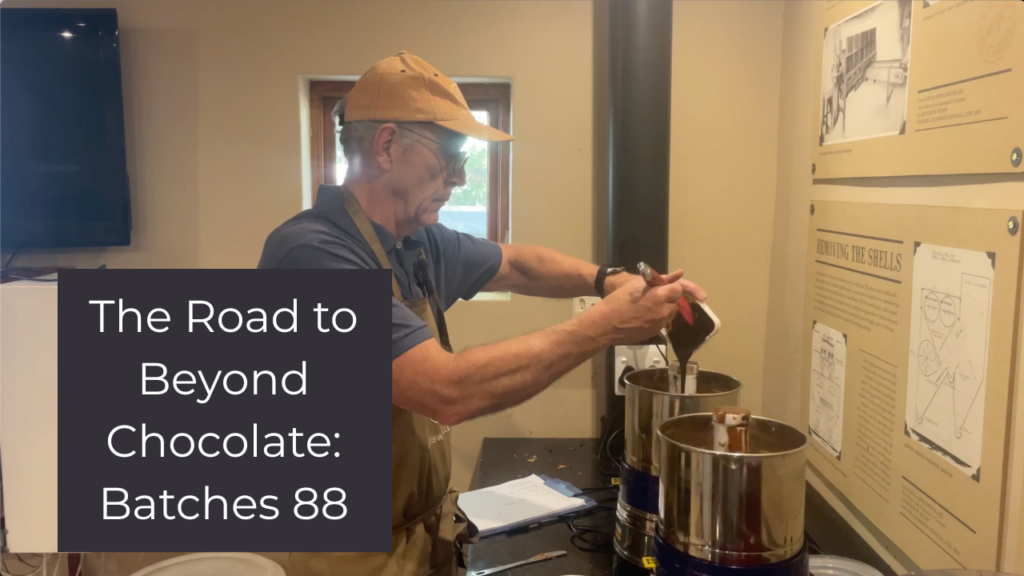
Into each melanger goes the base: roasted nuts and seeds with cacao liquor. Then, measured in precise sub-gram quantities: Himalayan salt, vanilla, monk fruit. Later in the run, I add sunflower lecithin (for texture and stability) and rosemary extract (to help protect freshness).
Each ingredient has its time and place. This order ensures smooth refining while preserving both functionality and flavor integrity.
24 Hours of Refining
The melangers ran for more than a full day, each batch slowly transforming:
- Dark Delight: intended as an evening indulgence, but early tastings showed the chia seeds were dominant.
- Charge: clean, steady energy — this one felt balanced from the start.
- Balance: also challenged by chia’s intensity, masking other notes.
At this stage, the chocolate is still evolving. Overpowering notes can settle, but they’re logged as data points for the next iteration.
Tempering and Molding
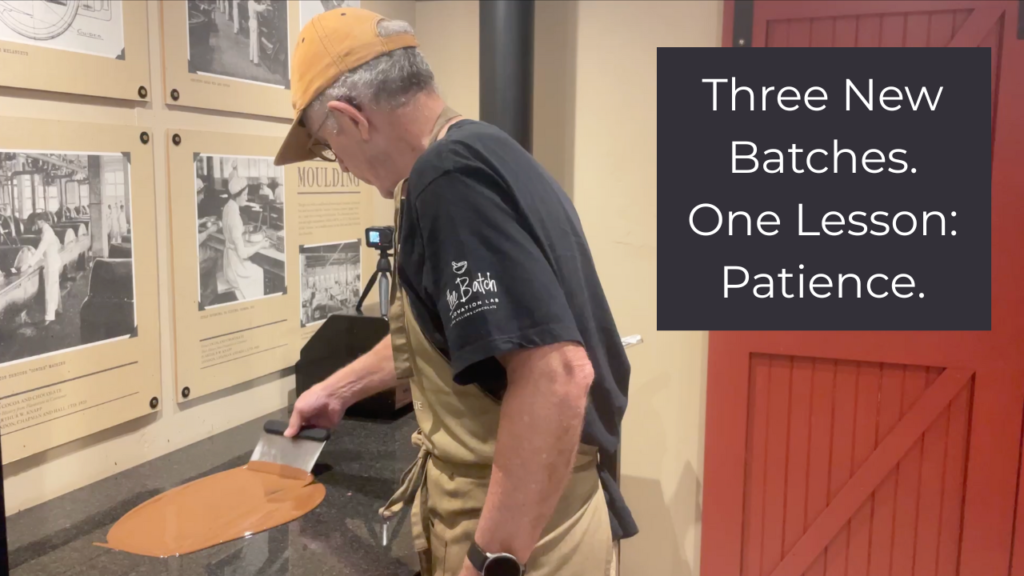
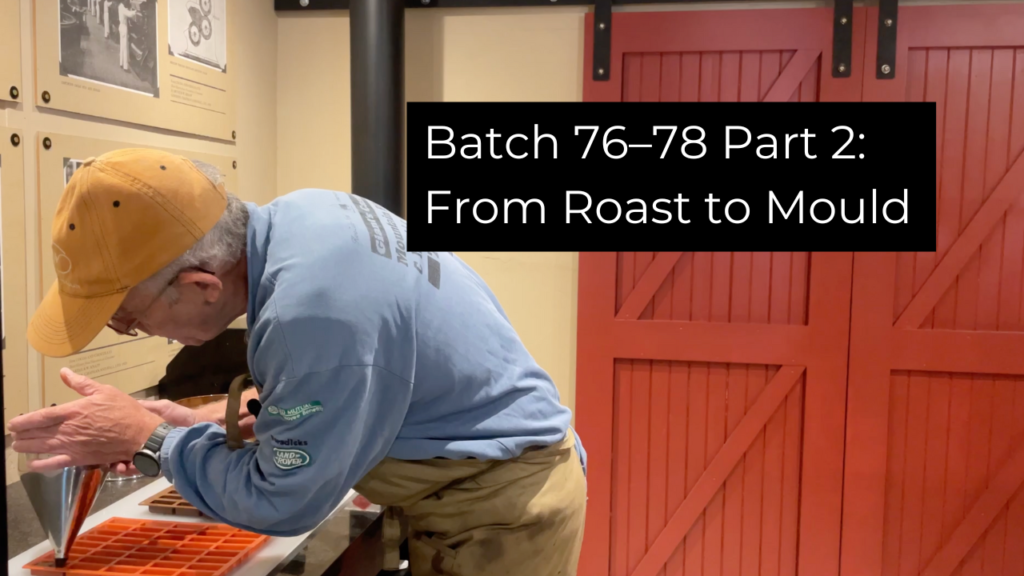
Tempering sets structure. I melted the chocolate to about 45°C, then used granite tabling to seed stable cocoa butter crystals. It’s precise work — too hot and crystals collapse, too cool and the chocolate thickens before molding.
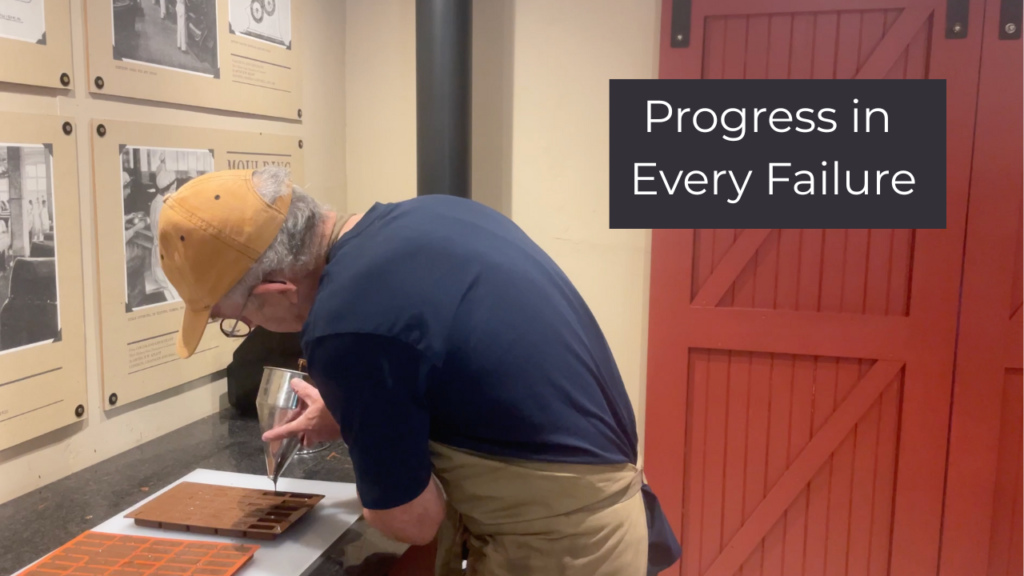
From here, some batches were poured into silicone moulds, others jarred (“bottled”). Once formed, they rest 24 hours to stabilise fully.
Spice Experiments on Delight
To push flavour boundaries, I split Dark Delight into three:
- One kept as-is.
- One blended with cinnamon + nutmeg.
- One with ginger, turmeric and black pepper.
Dosed carefully on the balance scale, tempered, and molded, these variations will help test how spice interacts with the core recipe.
Looking Ahead
This stage — roasting, refining, tempering, molding — is where the Dream Product moves from concept to reality. But process alone isn’t the end. The next and final step is tasting and evaluation.
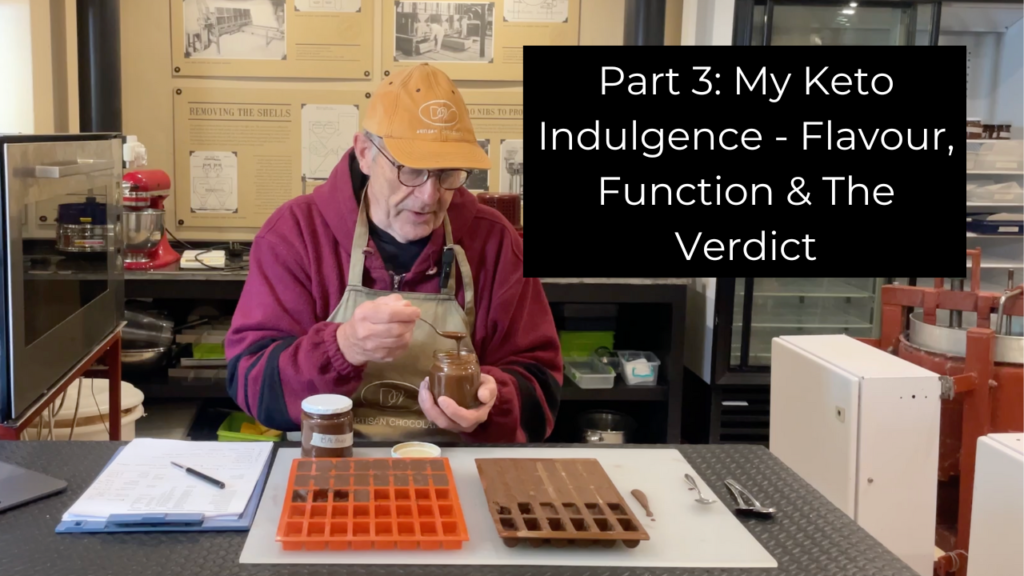
In Part 3, I’ll share how each batch performed across flavour, texture, and functionality — and whether Delight, Charge, and Balance moved closer to meeting the 8 Pillars.
👉 Follow the journey here and on YouTube, and be part of shaping what functional, indulgent chocolate can become.